GEFCO Took Part in the International Transport and Logistics Forum in St. Petersburg
10 April 2026
![[Translate to English:] Пленарная сессия «Новая география глобальной торговли: объединяя континенты»](/fileadmin/_processed_/6/7/csm_20260402_090435_3918602d6e.jpg)
![[Translate to English:] Пленарная сессия «Новая география глобальной торговли: объединяя континенты»](/fileadmin/_processed_/6/7/csm_20260402_090435_69ff0f65e4.jpg)
The first International Transport and Logistics Forum (ITLF), a large-scale industry event organized by the Ministry of Transport of Russia with the support of the Government, took place in St. Petersburg, April 1–3, 2026. GEFCO representatives participated in the forum as delegates.
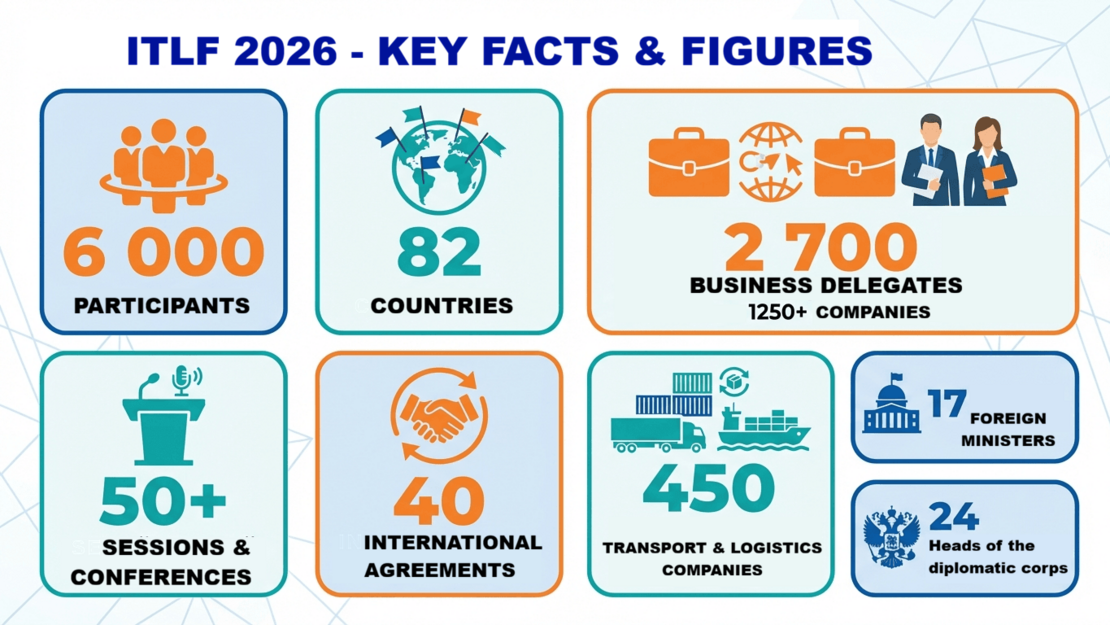
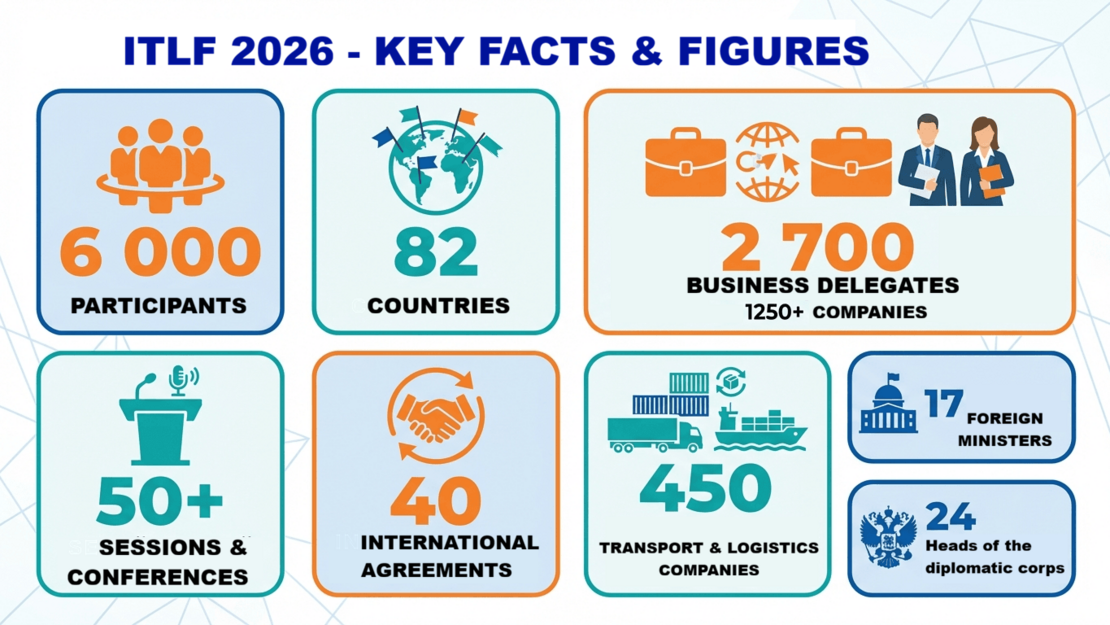
The Forum was held as part of the implementation of the instructions of the President of Russia to ensure the global competitiveness of domestic transport corridors and became a platform for an international dialogue on the formation of a seamless logistics space in Eurasia. During the three days of operation, the Expoforum Exhibition Center hosted about 6 000 participants from 82 countries, including 17 foreign ministers and 24 heads of the diplomatic corps. The business community was represented by more than 2 700 delegates from more than 1 250 companies, almost 450 of which work directly in the field of transport and logistics.
The business program included more than 50 sessions, discussions and round tables, united by three thematic blocks: “Logistics and transport industries”, “Global connectivity and transport corridors” and “Digitalization and the future of transport”. The key strategic outcome of the forum was the consolidation of the international transport corridors — North–South, Transarctic, BAM, Transsib, Russia–Mongolia–China routes — as a single continental system for the movement of goods and industrial cooperation. Special attention was paid to the Russian — Chinese logistics sector as the main driver of international transportation growth, as well as the role of digital platforms in reducing border crossing times and increasing route capacity.
During the forum, 40 international agreements in the field of transport were signed, and participants discussed the prospects for the development of multimodal solutions, high-speed highways, unmanned cargo transportation and the use of artificial intelligence in the transport industry.
Participation in the ITLF allowed the GEFCO delegation to get first-hand information about the strategic directions of the industry, assess the prospects for new transport corridors and establish contacts with colleagues from Russia and abroad. The knowledge and connections gained will be used in the company's further work to develop logistics services and improve the quality of services for customers.