SPIEF 2026: Pivot to the East and South
05 June 2026
From June 3 to 6, the St. Petersburg International Economic Forum is taking place at the ExpoForum Convention and Exhibition Centre. This year, it brought together representatives from more than 130 countries and territories, with approximately 20,000 participants. The main theme of SPIEF 2026 is “Pragmatic Dialogue as the Path to a Stable Future.” The extensive business program includes more than 300 events, and for the first time, one of the central, cross-cutting themes of the forum was the development of international transport corridors and multimodal logistics. Valeria Seledkova, Director of Strategic Development at GEFCO Russia, participated in the forum.
Logistics Agenda

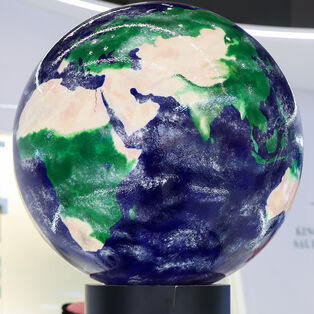
Despite the turbulence in international relations, SPIEF remains a unique platform for building new logistics, financial, and technological chains. This year, the organizers paid special attention to the development of international transport corridors, including the Trans-Arctic Route, as well as multimodal logistics in Arab and African countries.
For GEFCO, as an international logistics operator, several specialized sessions became key. The discussion “Digital Evolution of Transport: How Platforms Are Changing the Rules of the Game” focused on the digitalization of logistics, implementation of a “one-stop” solution, and electronic document management—areas that will directly shape the future of the industry. The session “New Horizons of Global Logistics and the Arctic Logistics Circuit,” supported by Rosatom State Corporation, focused on the transformation of global supply chains, the development of the Northern Sea Route, and the Trans-Arctic Transport Corridor.
Of particular interest was the “3+3” platform, which examined the prospects for developing the “North-South,” “West-East,” and “Crossroads of Peace” corridors, as well as the integration of the South Caucasus countries into the global transport and logistics system.
Dialogue with Key Partners
Logistics was among the important issues discussed during bilateral business dialogues. At Russia-India meetings, the development of the North-South international transport corridor was discussed; at the Russia-UAE dialogue, the vulnerabilities of supply chains in the Red Sea and Persian Gulf region and the development of alternative trade and logistics infrastructure were addressed; participants in the Russia-Brazil business dialogue noted that cooperation between Russia and Brazil is gradually shifting to a more sustainable and systemic model and that our country maintains its position as the largest supplier of mineral fertilizers to the Brazilian market. Transport and logistics were declared as one of the key areas within the framework of the Russia-Saudi Arabia business dialogue. This year, Saudi Arabia became a guest state at SPIEF 2026 and presented a large pavilion at the forum.
Technology and Digital Sovereignty
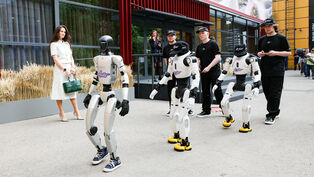

One of the program's key tracks is artificial intelligence and digitalization. A separate thematic unit was focused on robotics and the implementation of AI and digital platforms for supply chain management. Today, the use of AI in logistics directly impacts not only operational efficiency but also the talent pool of the entire industry.
SPIEF is a platform where practical logistics solutions are developed through direct dialogue between government and business. The growing number of international dialogues and the emphasis on the Trans-Arctic Corridor confirm that Russian logistics is finally turning to the East and South, and multimodal services are becoming a driver of foreign trade. By participating in SPIEF 2026, GEFCO confirmed its strategic course toward developing international multimodal services and strengthening partnership ties with the markets of Asia, the Middle East, and Africa.
Photo in the heading was made by Anatoly Strebelev. All images presented by “Roskongress” photobank.
Подробнее о решениях GEFCO Россия
![[Translate to English:]](/fileadmin/_processed_/1/e/csm_2_Transport-logistics-solutions_67065256_45a5f840a9.jpg "[Translate to English:]")
![[Translate to English:]](/fileadmin/_processed_/b/6/csm_22_LLP_64289486_9d5c2ee1c3.jpg "[Translate to English:]")
![[Translate to English:]](/fileadmin/_processed_/3/7/csm_24_one-time-solutions_69722847_ac9f720887.jpg "[Translate to English:]")